UX Lab Case Record
Usability Study of WikiFunctions for Bangladeshi Developers
A UX Lab case record on WikiFunctions usability, developer workflow comprehension, and Bangla–English localization evidence for Bangladeshi developers.
Context
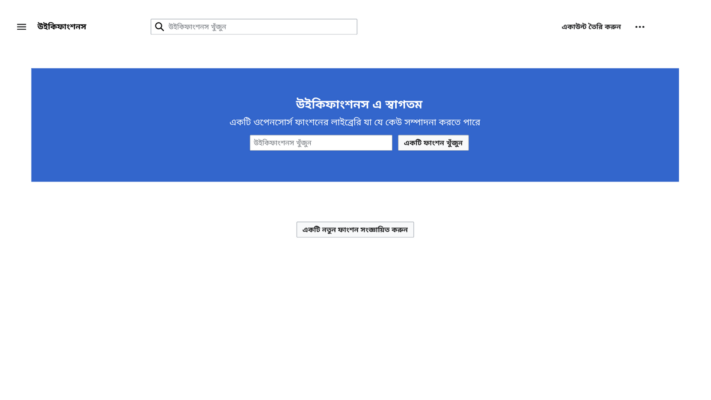
WikiFunctions is a Wikimedia Foundation platform designed to help developers and programmers create, view, edit, and share reusable functions. Userhub conducted usability research with developers in Bangladesh to evaluate whether WikiFunctions messaging, workflow structure, and interface language were understandable across English and Bangla prototype artifacts.
The engagement examined two related questions: whether participants could understand the core WikiFunctions workflows, and whether Bangla localization improved or complicated comprehension for users accustomed to English-language programming environments.
The case is relevant beyond WikiFunctions because it shows how localization, developer experience, and interface hierarchy interact in technical products. For developer-facing tools, usability depends not only on language availability, but also on whether labels, actions, workflow cues, and technical concepts match the mental models of the intended users.
Objectives
The study examined whether developers in Bangladesh could understand and complete key WikiFunctions workflows across prototype versions. The evaluation focused on three core activities: defining a function, viewing a function, and editing a function.
The research also explored interface discoverability, language preference, and the clarity of labels, descriptions, buttons, navigation elements, implementation states, test case areas, and workflow cues used across the prototypes.
A further objective was to distinguish general usability issues from language-specific comprehension issues. By comparing evidence from English and Bangla artifacts, Userhub could identify whether observed friction came from the product workflow, the interface structure, or the localized terminology.
Methodology
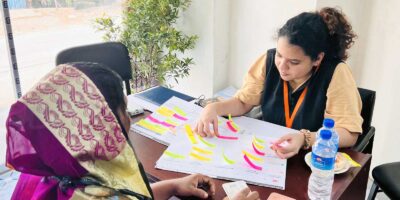
Userhub conducted moderated qualitative usability sessions through individual online video calls. Participants interacted with prototype artifacts while sharing their screens and responding to semi-structured questions.
The research was conducted across two related testing rounds. The first round focused primarily on English WikiFunctions artifacts and included review of Bangla materials. The second round focused on Bangla WikiFunctions artifacts and included an English comparison walkthrough to understand language preference and comprehension differences.
The sessions were conducted in Bangla. Recordings and transcripts were analyzed thematically to identify usability patterns, discoverability issues, comprehension gaps, language-related friction, and practical recommendations for design improvement.
By comparing findings across English and Bangla artifacts, Userhub triangulated general workflow issues against localization-specific comprehension issues.
Participants
The research included developers with beginner, intermediate, advanced, and expert-level programming experience. Participants had experience with languages including C++, Java, C#, PHP, Kotlin, and related development environments.
Participants were fluent in Bangla and English to varying degrees and generally used the internet, Wikipedia, and programming resources primarily in English. Bangla was used contextually, particularly when English content was unavailable or incomplete.
This participant profile was important for the research. The study did not only test whether Bangla translations were readable; it examined whether translated technical interfaces matched how local developers learn, work, collaborate, and interpret programming concepts.
Findings
The two testing rounds showed that participants generally understood the broad WikiFunctions workflow. Defining a function, recognizing input and output types, reviewing work summaries, and identifying implementation and test case areas were usually understandable once participants recognized the relevant interface regions.
However, several interface elements were not immediately discoverable. Participants missed or overlooked search, account creation, add-input controls, add-label controls, publish and cancel buttons, header navigation, edit controls, implementation buttons, test buttons, descriptions, and some state labels.
The view and details pages created more friction than the define-function workflow. Participants sometimes struggled to understand where to view the function definition, where to write code, how to interpret available and proposed implementations, and how verified or proposed tests should be understood.
The Bangla prototype introduced additional terminology and comprehension challenges. Participants could use Bangla conversationally, but technical concepts were often easier to process in English because their programming education, documentation habits, development work, and peer collaboration were largely English-oriented.
The English comparison walkthrough clarified this pattern. Participants preferred English for WikiFunctions because it felt more familiar for development-related tasks. At the same time, some participants indicated that Bangla could be useful if terminology was simpler, more familiar, or closer to the vocabulary used by local developers in everyday technical practice.
Taken together, the findings suggest that the main usability issues were not caused by language alone. They emerged from the interaction between language, discoverability, accessibility, prototype fidelity, and developer mental models.
Discussion
The triangulated evidence showed that some issues were general product-usability issues, while others were localization-specific. Missed buttons, unclear page hierarchy, low discoverability of secondary actions, and uncertainty around implementation or test states appeared as broader interaction-design concerns.
Language-related friction appeared when translated terminology did not align with the vocabulary developers used in their education, documentation, tools, and professional communication. In these cases, Bangla availability alone did not guarantee comprehension.
This distinction is important for localized developer platforms. Localization should not be treated only as a translation task. It requires validation against user behavior, professional vocabulary, interface expectations, and the conventions of the target technical community.
The study also indicated that prototype fidelity affected interpretation. Areas such as the code editor placeholder, implementation states, test case states, and workflow progress needed to look and behave closer to the final product for participants to provide more precise feedback.
Recommendations
Userhub recommended a multi-phase design iteration process focused on activity-centered usability. The interface should group related actions more clearly, improve button visibility, strengthen page hierarchy, and make descriptions, labels, form fields, instructions, and hints more accessible through stronger typography, color contrast, and placement.
The study recommended improving the visibility and labeling of key actions such as adding another input, adding labels in another language, publishing, cancelling, adding implementations, adding tests, reviewing code, and locating where code should be written.
Userhub also recommended validating revised designs with a new group of target users. Higher-fidelity prototypes would allow participants to respond more accurately to the intended product experience, especially around code-entry areas, implementation states, test cases, and workflow progress.
For Bangla language implementation, Userhub recommended further consultation with the local developer community. Focus group discussions could help identify terminology that is understandable, technically appropriate, and aligned with how developers in Bangladesh describe programming concepts in practice.
Conclusion
The WikiFunctions usability research showed that developers in Bangladesh could understand the broad workflow of defining, viewing, and editing functions, but experienced friction around discoverability, interface hierarchy, terminology, and workflow comprehension.
The two testing rounds strengthened the evidence. English prototype testing helped identify general workflow and interface issues, while Bangla prototype testing and English comparison walkthroughs clarified how language familiarity shaped comprehension and preference.
The findings point to a wider design lesson for localized developer platforms: language support must be tested against real user behavior, not only translation accuracy. For technical communities, effective localization depends on familiar terminology, visible workflow cues, accessible interface design, and product patterns that match existing development practices.
For Userhub UX Lab, the engagement demonstrates the value of triangulated usability research in separating product workflow issues from localization-specific issues. This distinction helps teams make more precise design decisions before wider product release.
Disclaimer
This case study summarizes usability research conducted by Userhub for the Wikimedia Foundation. It is based on information suitable for public institutional documentation, including publicly available report material where applicable. Confidential participant details, internal project materials, and non-public stakeholder discussions have been excluded.