Use this when
Real-user validation is needed
Use this route before launch, before scale-up, or when teams need observed evidence of task success, failure, and friction.
UX Lab Service
Task-based evaluation with real participants to validate critical flows, uncover interaction breakdowns, and ensure digital products meet user needs in real-world conditions.
Decision fit
Use this route when critical product flows need to be validated with real users before launch, redesign, rollout, or scale-up.
Operational logic
This route is used when teams need participant-based evidence rather than internal opinion, heuristic review, or stakeholder assumptions. It is especially useful when comprehension, terminology, localization, accessibility, trust, or task completion risk must be validated before a product decision.
Use this when
Use this route before launch, before scale-up, or when teams need observed evidence of task success, failure, and friction.
Primary output
Organizations receive findings grounded in participant behavior, including breakdown points, error patterns, and task-level decision implications.
Choose another route
If the main need is structured expert assessment rather than participant observation, use Product UX Evaluation.
Product UX Evaluation →Choose another route
If the main need is broader adoption insight, lived constraints, or opportunity discovery, use Human-Centered Research.
Human-Centered Research →Service boundary
This route focuses on moderated usability validation with target users. It can support prototype review, live-product assessment, localization decisions, accessibility-oriented findings, and rollout readiness. It does not replace discovery research, engineering QA, analytics review, or full accessibility certification.
Scope
Scope is defined around the decision to support: the tasks to validate, the users to include, and the contexts most likely to affect real-world performance.
Scoping note
If scope is uncertain, start from the decision goal and validate one to three critical tasks first. Broader coverage can follow after primary breakdown points are resolved.
Process
The method is structured to produce decision-ready evidence with clear boundaries, governance, and implementation relevance.
Confirm what must be validated and what success means for each critical task.
Select user groups, session format, language approach, and governance constraints.
Observe task performance, hesitation points, error patterns, and recovery behavior in realistic scenarios.
Group issues by task and root cause, then assess severity and decision risk.
Deliver findings and a fix or revalidation path for implementation planning.
Process note
Sessions may be conducted remotely or in person, and Bangla moderation can be used where it improves comprehension and the validity of observed behavior.
Outputs
Outputs support rollout, redesign, and mitigation decisions by connecting observed behavior to task performance, user risk, and implementation priorities.
Observed task evidence
Reporting and recommendations
Request testing scope
Share the product or prototype link, the target users, and the critical tasks you need to validate.
Request testing scopeGovernance
Governance protects participants, supports credibility, and reduces risk, especially in sensitive, multilingual, or regulated contexts.
Case example
This example shows how moderated sessions surfaced language and discoverability constraints and translated them into actionable improvement direction.
Case example
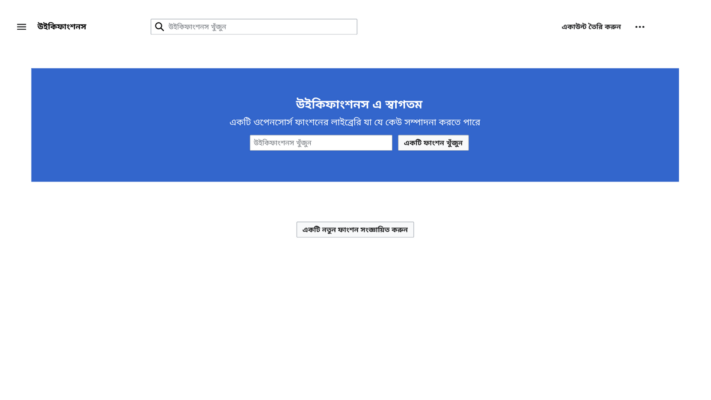
Moderated online sessions evaluated how Bangladeshi developers defined functions, viewed functions, and edited functions within WikiFunctions. Sessions were conducted in Bangla and used prototype sets to surface comprehension, terminology, and discoverability constraints.
Findings highlighted a preference for English in technical contexts due to familiarity with terms, alongside discoverability issues that affected confidence and workflow completion. Recommendations focused on improving discoverability cues and refining language and terminology choices to reduce cognitive load.
What this demonstrates
FAQ
Short answers for teams evaluating sample size, scope, language validity, and governance.
Request
Usability Testing & Validation helps teams verify whether target users can complete critical tasks, understand product flows, and proceed with confidence before launch, redesign, or scale-up. It is suited to digital products, public service platforms, multilingual interfaces, AI-supported tools, and mission-critical workflows where usability failures can affect adoption, trust, or service delivery.
Usability Testing & Validation helps teams verify whether target users can complete critical tasks, understand product flows, and proceed with confidence. It is suited to digital products, public service platforms, multilingual interfaces, AI-supported tools, and mission-critical workflows where usability failures can affect adoption, trust, or service delivery.