
ORGANIZATIONAL WORKSHOP

Human-Centered Product Thinking

A two-day workshop commissioned by organizations for their teams to strengthen how they understand people, frame problems, and make product decisions.

Build a shared basis for product decisions.

The workshop helps teams examine what they observe, what they infer, and what still needs to be understood before they frame problems or commit to a direction. A signal is not the same as an experience.

Capability 01

Understand users in context

Consider people, situations, goals, constraints, and the work surrounding a product or service.

Capability 02

Separate observation from interpretation

Distinguish what can be observed from what the team thinks it means.

Capability 03

Frame problems carefully

Turn broad signals and competing perspectives into clearer questions.

Capability 04

Explore alternatives before committing

Compare possible directions before implementation narrows the field.

Capability 05

Strengthen decisions across functions

Use shared reasoning across product, technology, business, operations, design, and research.

A two-day progression from understanding to application.

The workshop is facilitated in person. Day 1 builds a shared basis for human-centered reasoning; Day 2 applies it to product decisions.

Day 1

Human-Centered Thinking

  • Examine assumptions against user context.
  • Identify what matters in real situations.
  • Define problems with greater care.

Day 2

Applying Human-Centered Product Thinking

  • Compare alternative approaches.
  • Communicate ideas across functions.
  • Apply clearer reasoning to day-to-day product decisions.

Delivered for bKash Limited.

Userhub delivered Human-Centered Product Thinking for professionals from bKash Limited’s Product & Technology teams on 8–9 August 2026.

View the workshop delivery
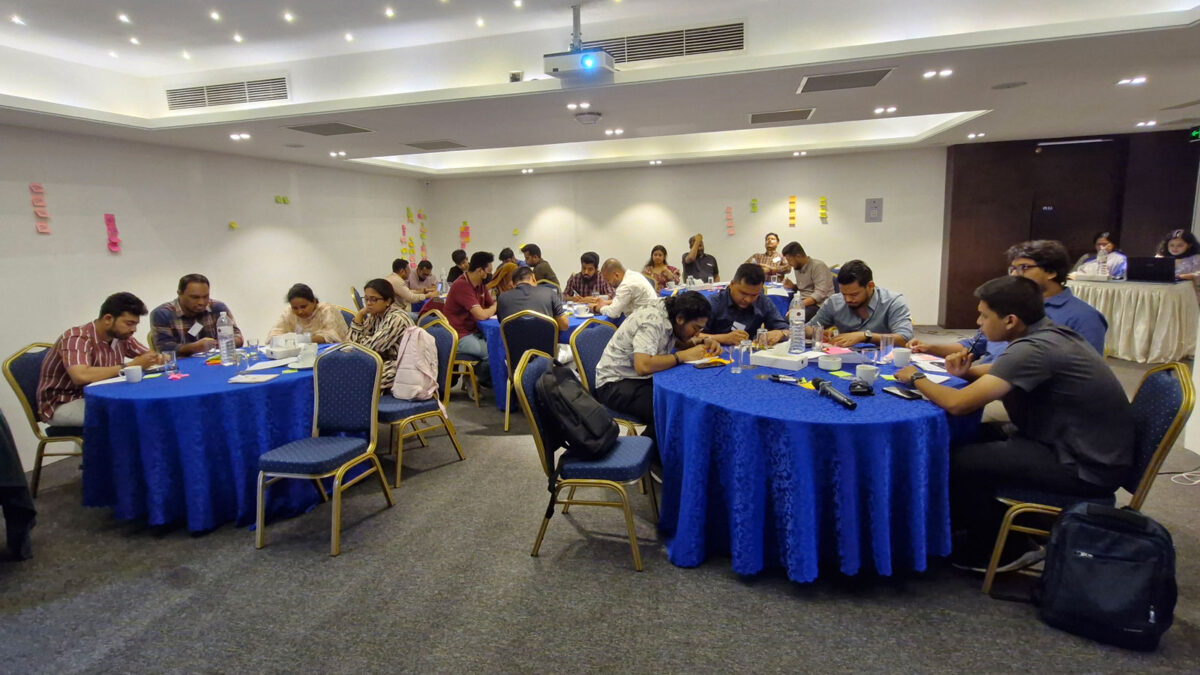
Professionals from bKash Product & Technology teams during Userhub’s Human-Centered Product Thinking workshop.
Participants from bKash Product & Technology teams during the workshop.

A defined format, adapted to your context.

Organizations commission the established two-day workshop for selected participants from one team, several teams, or across functions.

  1. Share the context

    Share a little about your organization and what you are considering for the workshop.

  2. Confirm participants

    Select up to 30 participants from one team, several teams, or related functions.

  3. Adapt the emphasis

    Userhub adjusts examples and emphasis to the organization and participant mix.

  4. Deliver the workshop

    The core two-day structure remains consistent. Larger groups can use multiple cohorts.

Questions about the workshop

Common questions about participation, adaptation, and commissioning.

What is Human-Centered Product Thinking?
Human-Centered Product Thinking is a facilitated two-day organizational workshop that helps teams understand people in context, frame problems carefully, explore alternatives, and make stronger product decisions.
Who is the workshop for?
Organizations can bring together one team, several teams, or selected participants from product, technology, business, operations, design, research, and related functions.
How many participants can take part?
One workshop is designed for up to 30 participants. Larger groups can use multiple cohorts.
Can individuals register for this workshop?
No. The workshop is commissioned by an organization for selected participants rather than offered for individual registration.
What can be adapted for our organization?
Context, examples, emphasis, and relevant product or service situations can adapt to the organization and participant mix. The two-day structure and core capability goals remain consistent.
How do we commission the workshop?
Send a short inquiry with your organization details. Userhub will follow up to discuss fit, delivery scope, and next steps.

[ DISCUSS DELIVERY ]

Bring Human-Centered Product Thinking to your organization

For one team, several teams, or a cross-functional group.

Share a few details about your organization. We’ll follow up to discuss how the workshop could work in your context.