Userhub completed a human-centered WASH demand creation strategy assignment for the WASH Alliance International sub-programme in Bangladesh, with Simavi serving as the lead implementing partner.
The assignment focused on WASH-related behavior change across communities in Satkhira and Barguna. The work addressed sustainable sanitation and hygiene practices, menstrual health, inclusive participation in WASH-related decision-making, and the involvement of men and boys in household care responsibilities.
The assignment formed part of the wider WASH SDG Programme, which aimed to improve sanitation and hygiene outcomes for at least 2 million people and safe drinking-water access for at least 450,000 people by 2022. Userhub’s role focused on developing the demand creation strategy and supporting implementation readiness for the Bangladesh sub-programme.
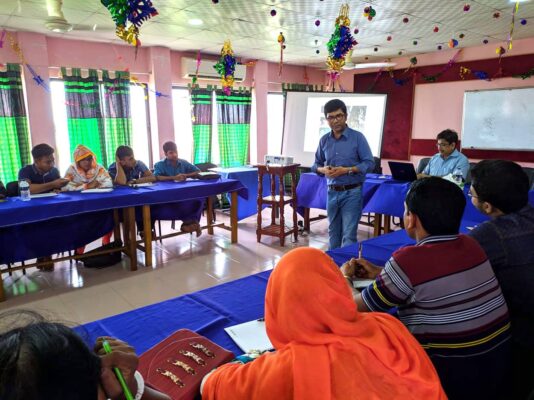
Userhub’s work included qualitative field research, persona development, partner gap analysis, behavior-change strategy design, communication-material testing, message refinement, and implementation-readiness training for WAI local partner teams.
The field research covered Satkhira Sadar, Satkhira Municipality, Kalaroa Municipality, Barguna Sadar, Barguna Municipality, Amtali, Betagi, and Patharghata. The work combined community interviews, focus group discussions, partner workshops, testing sessions, and training support.
The implementation-readiness training included representatives from WaterAid, Uttaran, DORP, SLOPB, Practical Action, Hope for the Poorest, Simavi, and Userhub.
The assignment was aligned with SDG 6 on clean water and sanitation, with related concerns around gender equality and social inclusion. It shows how human-centered design and behavior-change communication can support WASH programmes when community adoption depends on trust, motivation, social norms, household decision-making, and local implementation capacity.
Update: A detailed UX Lab case record has since been added for this engagement: Human-Centered WASH Demand Creation Strategy in Bangladesh.